
A sufficiently fast and simple antimicrobial susceptibility test (AST) is urgently required to guide effective antibiotic use and to surveil antimicrobial resistance rates.
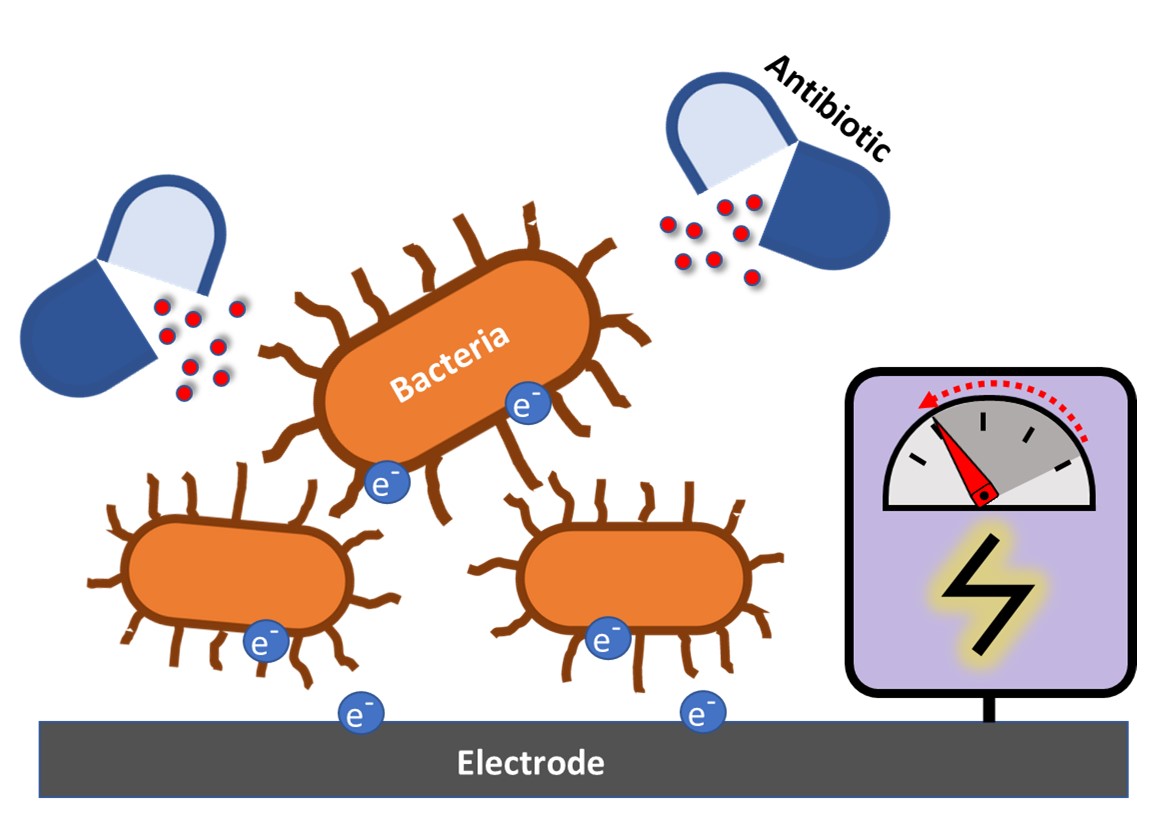
This work establishes a rapid, quantitative, and high-throughput phenotypic AST by measuring electrons transferred from the interiors of microbial cells to external electrodes. Because the transferred electrons are based on microbial metabolic activity and are inversely proportional to the concentration of potential antibiotics, changes in electrical output can be readily used as a transducing signal to monitor bacterial growth and antibiotic susceptibility efficiently.
The sensing is performed by directly measuring the total energy, or all accumulated microbial electricity, generated by microbial fuel cells (MFCs) arranged in a large-capacity, disposable, paper-based testbed.
This approach provides quantitative, actionable minimum inhibitory concentration (MIC) results within just a couple of hours because it measures electricity produced by bacterial metabolism instead of relying on conventional growth-observation methods that typically require days.
Because the required equipment is simple, common, and inexpensive, this testing platform has strong potential for use in the field and in resource-limited hospitals and laboratories, enabling practical and insightful assessments for both research and clinical applications.
← Back to Research